-1.svg)

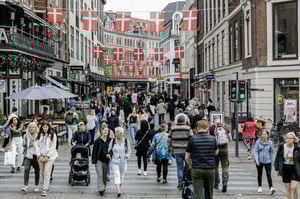
Denmark is the only country with two entries in the 2025 10 happiest cities list. An analysis by the Happy City group ranked Copenhagen as the happiest city in the world and Denmark's second largest city, Aarhus, is the fourth happiest. Rather than ask people if they are happy, which produces highly skewed results to due cultural differences and a lack of an objective anchor, this ranking is based on living conditions, including health, income, governance, and the environment.
While I applaud this objective approach to capturing the conditions that enable people to live happier lives, this analysis misses the most important source of happiness: Human connection. The World Happiness Report 2025, produced by University of Oxford’s Wellbeing Research Centre, showed that around 50% of people's self-reported happiness is due to the quality of their social relationships. People who are married, especially those with children, and those who regularly interact with friends, report greater happiness. Certainly city-level policies indirectly affect relationships, but many poorly-run cities have an abundance of happy people in them because of strong social connections. Think of Rio de Janeiro or Palermo or Cartegena.
I had a research appointment at Aarhus University for a number of years and, as a result, I have spent a significant amount of time in both Copenhagen and Aarhus. I can share from personal experience that Danish society is organized around social connection. Most Danish cities are full of coffee shops, restaurants, and have extensive public transport where people constantly interact with each other. There are only 5.5 million Danes and they are the only people on the planet who speak their native tongue. With negligible immigration, all Danes are cousins. It is certainly easy to congregate with cousins.
In order to reinforce genetic ties, Denmark has institutionalized socializing. For example, most organizations have a coffee room where at 3:30 in the afternoon, coffee and cookies are laid out for people to stop work and mingle and recharge. The Danes also have an informal institution called hygge which values comfort, warmth, simplicity, and human connection. People design hygee experiences for friends and family that include food and drinks around a roaring fire, especially during the cold and dark northern winters. Hygge has been shown to improve satisfaction with life, reinforce social bonds, and sustain wellbeing.
In Denmark, starting in childhood, helping others is prioritized through programs called folkeskole and ungdomsskoler. The former starts in kindergarten and connects students with volunteer opportunities in libraries and elder homes, and for park cleanups. Older students are in ungdomsskoler after-school clubs in which they volunteer to tutor younger children and help in their communities as well. These programs inculcate the norm of serving others and have been shown to increase interpersonal trust. My own research has shown a nearly perfect positive relationship between trust and happiness.
There is no doubt that Denmark's high per capita income, generous social welfare programs, and well-functioning government facilitate social interactions. The government policies that the Happy City group measured are, I would argue, the result of the strong social connections in Denmark that produce happiness rather than their cause. Citizens who trust each other in countries like Denmark demand good government and typically get it. This is, of course, much easier in small, homogenous countries full of cousins.
You can raise your own happiness by identifying how much social connection you need to be happy using Immersion's free SIX app...and you don't even have to move to Denmark. SIX gives you a simple goal: get six high neural value Key Moments per day. The app runs in the background all day, privately capturing neural activity from signals pulled from smartwatches and fitness wearables. SIX shows users which experiences produce the most value for their brains, automatically identifying when and where they happened. Using these data, SIX's trained AI assistant tells users what to do to be happier; hint: this nearly always involves social interactions. The research shows that Key Moments improve immune function and reduce stress. They also cause the brain to adapt, making it easier to be present and emotional open--just the attributes of people others want to connect with. SIX is your own slice of hygge--it's free, so there is no reason not to try it.